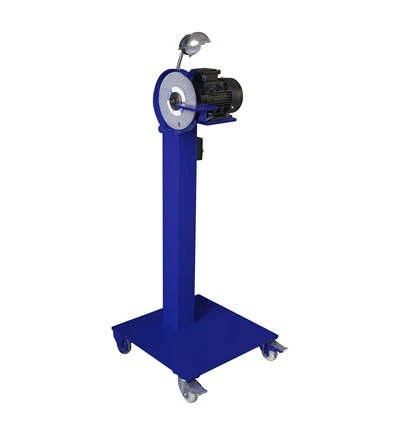

A metal band saw is designed to produce straight, accurate cuts through various materials, including carbon steel, stainless steel, alloy steel, tool steel, and structural profiles. However, many operators experience a common problem: the blade gradually moves away from the intended cutting line, creating angled or crooked cuts. This phenomenon is often referred to as blade drift.
Blade drift does not usually come from a single factor. It is the result of multiple interactions between blade characteristics, machine conditions, cutting parameters, material properties, and operator practices.
Incorrect Blade Selection: The First Cause of Cutting Deviation
Different materials require different blade structures:
Carbon steel blades are commonly used for wood, soft materials, and general applications.
Bi-metal band saw blades combine HSS cutting teeth with flexible alloy steel backing, providing high durability for general metal cutting.
Carbide band saw blades are designed for difficult-to-cut materials such as stainless steel, titanium alloys, hardened steels, and high-temperature alloys.
When a blade is not suitable for the material, excessive cutting resistance can force the blade to deflect during operation.
For example:
●A blade with insufficient tooth strength may lose stability when cutting large steel sections.
●A blade with an incorrect tooth pitch may experience tooth loading or vibration.
●A blade designed for general cutting may drift when used on high-hardness alloys.
●Choosing the correct blade material, tooth geometry, and pitch is the foundation for maintaining straight cutting performance.
Tooth Geometry and TPI Selection Influence Blade Stability
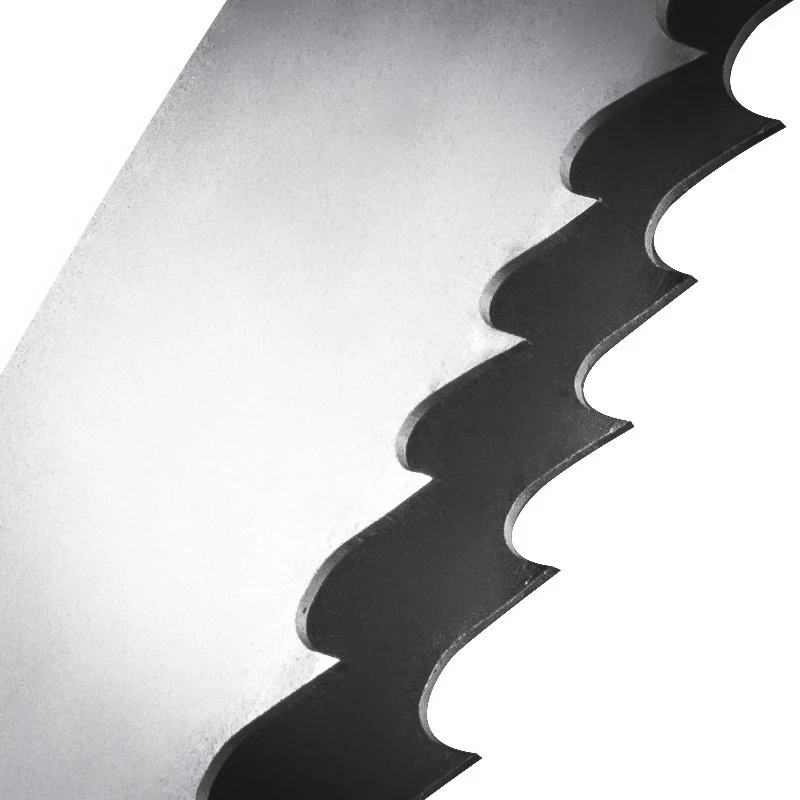
Tooth design directly affects how cutting forces are distributed along the blade.
Selecting the correct TPI is critical.
For example:
●Too coarse a tooth pitch on thin-wall tubes can cause aggressive tooth engagement and vibration.
●Too fine a tooth pitch on large solid materials can create chip congestion and excessive friction.
Both conditions can increase lateral blade movement.
Different tooth profiles are designed for different cutting conditions:
●Hook teeth provide aggressive cutting performance for higher productivity.
●Skip teeth improve chip clearance in materials generating large chips.
●Variable pitch teeth reduce vibration and improve cutting stability.
For bi-metal band saw blades, optimized tooth designs such as hook, skip, variable pitch, and reinforced tooth structures help maintain consistent cutting force distribution and reduce blade wandering.
Improper Blade Tension Causes Deflection During Cutting
Blade tension determines the rigidity of the cutting system.
Insufficient tension allows the blade to move laterally when cutting pressure increases. As the blade enters harder sections of the material, it may bend and gradually create an angled cut.
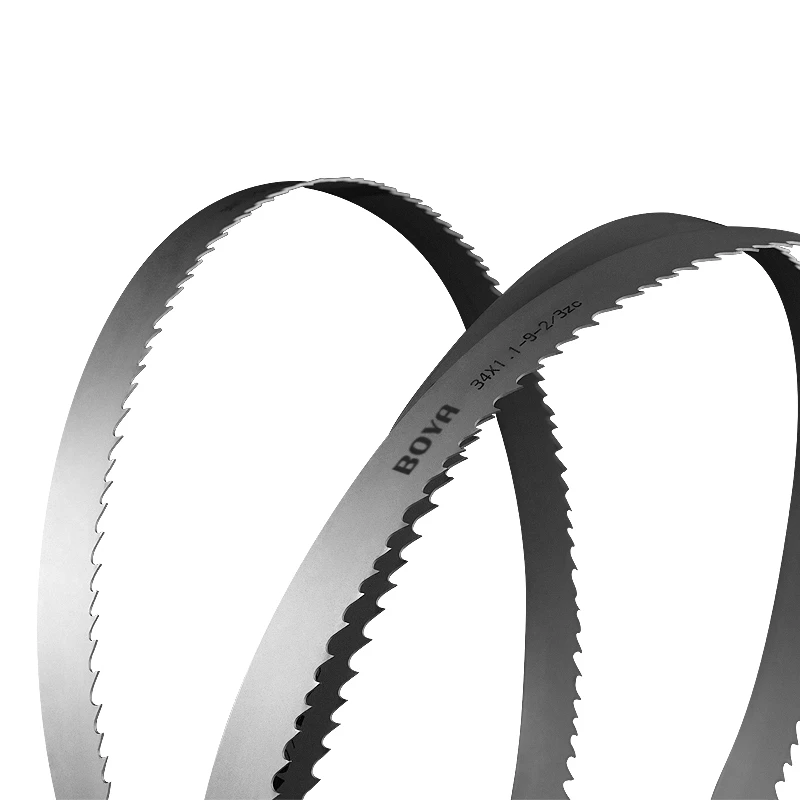
Common symptoms include:
●Entry and exit points do not align
●Cut surface shows uneven marks
●Blade vibration increases
●Blade life decreases
However, excessive tension is also harmful. Over-tensioning can increase fatigue stress on the blade body and accelerate cracking, especially near welded joints.
The optimal tension should provide sufficient blade stability while maintaining the fatigue resistance of the backing material.
This is one reason why high-quality bi-metal band saw blades use flexible spring steel backing materials. The backing must withstand repeated bending cycles while maintaining stable support for the cutting edge.
Worn or Damaged Blade Teeth Create Uneven Cutting Forces;
A new blade generally cuts straight because all teeth have consistent geometry and sharpness. During operation, tooth wear changes the balance of cutting forces. When some teeth become duller than others, cutting pressure becomes uneven. The sharper side removes more material, causing the blade to pull toward one direction.
But Even a high-quality blade can drift if operating parameters are incorrect.
The two most important parameters are cutting speed and feed rate.
When feed pressure is too high:
●Teeth experience excessive load;
●Blade deflection increases;
●Vibration becomes stronger;
●Tooth damage occurs faster;
When feed is too low:
●Teeth rub instead of cutting effectively
●Heat generation increases
●Premature tooth wear occurs
The correct balance allows each tooth to remove material efficiently without exceeding its mechanical capability.
For different materials, cutting parameters must be adjusted accordingly. Stainless steel, alloy steel, aluminum, and carbon steel all require different combinations of speed and feed.
Machine Alignment and Guide System Problems
Blade drift is not always caused by the blade itself. Machine conditions play an equally important role.
Several mechanical issues can create crooked cuts:
Incorrect Blade Guide Adjustment
Blade guides support the blade near the cutting area. If the guides are too far apart or incorrectly adjusted, the blade has more opportunity to move sideways.
Wheel Alignment Problems
If the band saw wheels are not aligned correctly, the blade may not run perpendicular to the cutting direction.
Loose Components
Any looseness in:
●Blade guides
●Workpiece clamps
●Machine structure
can introduce vibration and cutting deviation.
Regular inspection and maintenance of the machine are essential for maintaining cutting accuracy.
Material Conditions Also Affect Cutting Direction
The material being cut can influence blade behavior.
Different materials create different cutting forces:
Solid Bars
Large cross-section materials require stronger tooth engagement and stable blade support.
Tubes and Profiles
Interrupted cutting conditions create repeated impact loads. Special tooth designs, such as reinforced or anti-impact geometries, help prevent tooth damage and blade deviation.
Hardened Materials
High-strength materials create higher resistance and require more wear-resistant cutting edges.
Understanding the material structure is essential when selecting the correct band saw blade.
A metal band saw blade cutting on an angle is usually the result of an imbalance between blade design, machine condition, material characteristics, and cutting parameters.
High-performance cutting requires more than selecting a strong blade. The correct combination of tooth material, tooth geometry, backing strength, and operating conditions determines whether a blade can maintain straight and stable cutting.