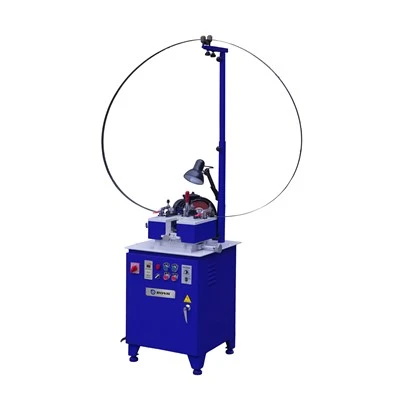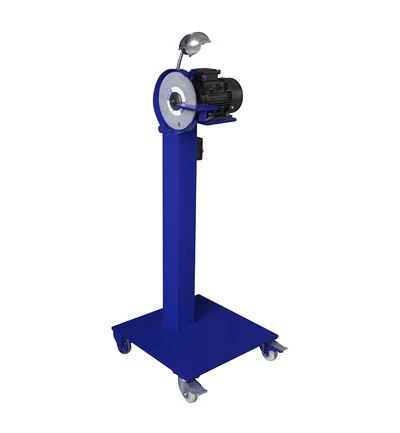

Correct bandsaw setup is essential for maintaining cut accuracy, maximizing blade service life, and ensuring reliable machine operation in both industrial production and workshop environments. Across metalworking, woodworking, and mixed-material applications, the way a bandsaw is adjusted-particularly blade tension, tracking, wheel alignment, and guide configuration-directly affects vibration control, cutting stability, and operator safety. Contemporary best practices emphasize controlled, step-by-step adjustment supported by measurement and observation, rather than aggressive or trial-and-error tuning.
Blade Tension: Establishing Cutting Stability
Blade tension forms the basis of effective bandsaw performance. Proper tension keeps the blade securely seated on the wheels while preventing excessive flexing during cutting. Required tension levels depend on blade width, thickness, and material, but a general benchmark is that the blade should remain stable and free from flutter when the wheels are rotated by hand under light pressure.
Operators typically rely on built-in tension scales, deflection checks, or visual feedback to confirm correct tension. Insufficient tension often leads to wandering cuts and vibration, while excessive tension increases stress on bearings, wheels, and tires, accelerating mechanical wear. Once the initial tension is applied, slowly rotating the blade by hand allows verification that it remains properly seated before proceeding to tracking adjustments.
Blade Tracking and Wheel Alignment
Blade tracking determines the blade's position on the wheel crown. For optimal performance, the blade should run close to the center of the crown, ensuring balanced contact and uniform wear. Tracking is adjusted incrementally using the tracking control or wheel tilt mechanism while manually rotating the wheels. Small, controlled movements are critical, as abrupt changes can force the blade off the wheel or introduce lateral stress that affects cut accuracy.
Wheel alignment is equally important. The upper and lower wheels must align in the same plane-commonly referred to as being coplanar-to prevent blade instability or uneven loading. Alignment is typically checked using a straightedge across both wheels, with shims or adjustment mechanisms used to correct any offset. Proper wheel alignment promotes consistent tracking and reduces premature blade and component wear.
Guide and Support Bearing Configuration
After blade tension and tracking are stabilized, guide assemblies must be adjusted to control blade movement during cutting without creating unnecessary friction. Most systems include side guides, thrust bearings, and rear support bearings, each serving a specific function.
Side guides are positioned just behind the blade gullets to limit lateral deflection. They should be set close enough to restrict twisting but remain clear of the blade during idle rotation. A small, measured clearance-often set with a feeler gauge-is recommended.
Thrust bearings prevent the blade from being pushed backward when cutting pressure is applied. These bearings should not contact the blade at rest but engage smoothly under load. Improper placement can lead to uneven wear or blade drift.
Support bearings stabilize the blade from behind during cutting, maintaining consistent engagement and preventing excessive rearward movement.
Guide adjustment is an iterative process. After setup, manually rotating the wheels ensures that guides engage only when cutting forces are present. Any continuous contact without load indicates the need for further refinement.

Table and Fence Alignment
Cut accuracy also depends on proper table and fence calibration. The table surface must be square to the blade to produce straight, accurate cuts, while the fence should run parallel to the blade path. Alignment is verified using precision squares or straightedges, with tilt or shim adjustments correcting any deviation. Even minor misalignment can cause binding, drift, or inconsistent results, particularly in precision fabrication or joinery work.

Testing and Fine Adjustment
Following mechanical setup, test cuts using representative materials are essential. Operators should evaluate chip formation, surface finish, and blade behavior under load. Auditory feedback and vibration levels provide valuable clues-sharp noise may indicate excessive tension, while sluggish cutting often points to inadequate support or improper tension. Coolant application and effective chip removal further enhance cutting consistency and thermal control.
Maintenance and Long-Term Performance
Regular maintenance supports long-term adjustment accuracy. Wheels, guides, and bearings should be kept clean to prevent buildup that interferes with tracking. Tire condition is especially critical; worn or uneven tires compromise blade stability and make precise adjustment difficult. Maintaining records of proven settings for specific blades and materials can significantly reduce setup time in repeat operations.
Safety and Best Practices
All adjustments must be performed with the machine powered off and isolated from its energy source. Installing a new blade requires a complete reassessment of tension, tracking, and guide settings, as blade dimensions and metallurgy influence behavior. Adjustments should always be made gradually to avoid overshooting optimal positions and introducing unsafe conditions.
Effective bandsaw setup relies on a systematic approach to blade tensioning, tracking, wheel alignment, and guide adjustment. When these elements are properly coordinated, operators achieve improved cut quality, extended blade life, and greater machine reliability. Through disciplined adjustment procedures, precise measurement, and validation via test cuts, bandsaw users can consistently meet performance demands while reducing waste, downtime, and mechanical stress across both metalworking and woodworking applications.