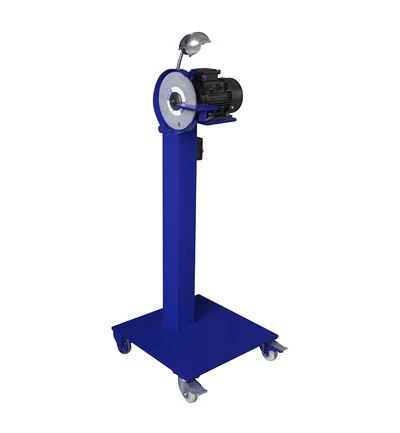

In industrial cutting operations, circular saw blades represent a high-value consumable whose performance and service life are strongly influenced not only by cutting parameters, but also by handling, storage, and selection practices during idle periods. Improper storage and mismatch between blade design and application can lead to premature wear, tooth damage, and unexpected failure when the blade is returned to service.
Drawing on established industry practice and manufacturing experience, this article outlines key technical considerations for managing circular saw blades that are temporarily out of operation, while also addressing broader issues related to blade structure, tooth materials, and failure mechanisms.

Proper Storage to Preserve Blade Integrity
Circular saw blades that are not immediately required should be stored vertically, preferably on dedicated racks, to prevent distortion of the blade body. Prolonged flat stacking or placing heavy objects on top of blades can introduce residual stress, resulting in warping or loss of flatness. During storage, the cutting edges and tooth tips must be protected from mechanical impact. Even minor collisions can create micro-chipping or cracking at the cutting edge, which significantly reduces cutting stability once the blade is reused.
For high-speed steel (HSS) circular saw blades-often classified as peripheral milling cutters due to their cutting edges being distributed along the outer circumference-maintaining edge integrity is particularly important. These tools operate at high rotational speeds and are widely used for cutting or grooving stainless steel, carbon steel pipes, copper, aluminum profiles, plates, and selected non-metallic materials. Because such tools function both as saw blades and milling cutters, any edge damage accumulated during storage can directly compromise cutting accuracy and tool life.

Structural Differences and Blade Selection Considerations
Compared with conventional steel saw blades, alloy-tipped circular saw blades are widely adopted in woodworking and metalworking due to their higher wear resistance and cutting efficiency. However, blade performance is closely tied to a complex set of parameters, including carbide grade, blade body material, diameter, tooth count, plate thickness, tooth geometry, hook angle, and arbor size. Each parameter plays a role in determining cutting capability, vibration behavior, and heat dissipation.
Incorrect blade selection-such as choosing an unsuitable tooth count or tooth form for the material thickness and feed rate-can increase cutting resistance and accelerate wear. Many modern alloy saw blades are designed with relatively dense tooth configurations to improve surface finish. However, excessively high tooth density reduces the effective contact area between the blade body and individual carbide tips. When such blades encounter hard inclusions or interrupted cuts, stress concentration can cause cracking at the tooth base, sharply reducing blade life.
Compared with conventional steel saw blades, alloy-tipped circular saw blades are widely adopted in woodworking and metalworking due to their higher wear resistance and cutting efficiency. However, blade performance is closely tied to a complex set of parameters, including carbide grade, blade body material, diameter, tooth count, plate thickness, tooth geometry, hook angle, and arbor size. Each parameter plays a role in determining cutting capability, vibration behavior, and heat dissipation.
Incorrect blade selection-such as choosing an unsuitable tooth count or tooth form for the material thickness and feed rate-can increase cutting resistance and accelerate wear. Many modern alloy saw blades are designed with relatively dense tooth configurations to improve surface finish. However, excessively high tooth density reduces the effective contact area between the blade body and individual carbide tips. When such blades encounter hard inclusions or interrupted cuts, stress concentration can cause cracking at the tooth base, sharply reducing blade life.

Tooth Manufacturing and Welding Quality

The performance of alloy-tipped saw blades is also influenced by the quality of carbide teeth and their attachment to the blade body. Carbide tips are typically produced through powder metallurgy, sintered at temperatures around 1,200 °C under high pressure. To preserve the metallurgical structure of the carbide during assembly, modern blade manufacturers increasingly adopt low-temperature brazing techniques.
In controlled welding processes, brazing temperatures are generally maintained below 750 °C and distributed evenly to ensure consistent bonding strength. Excessive heat can degrade carbide toughness or weaken the joint between the tooth and blade body. Prior to welding, the tooth seat must be free from rust, oxides, and contaminants. Flux application must be carefully controlled-neither excessive nor insufficient-to avoid voids or weak bonding zones. Environmental cleanliness and stable workshop conditions further contribute to consistent weld quality and long-term blade reliability.
https://www.boyatools.com/circular-saw-in-metal-cutting/pvd-cermet-circular-saw.html
Operational Issues Leading to Tooth Failure

01
02
Integrated Approach to Blade Longevity
Effective management of circular saw blades during non-use is inseparable from broader blade selection and application strategies. Proper storage protects blade geometry and cutting edges, while informed selection of tooth design and pitch ensures compatibility with material type and cutting conditions. Attention to welding quality, machine stability, and feed control further reduces the risk of premature failure.
By treating storage, selection, and operation as an integrated system rather than isolated steps, manufacturers and fabricators can significantly extend blade service life, improve cutting consistency, and lower overall tooling costs. In competitive production environments, disciplined blade management is not merely a maintenance task-it is a strategic component of efficient and reliable cutting operations.