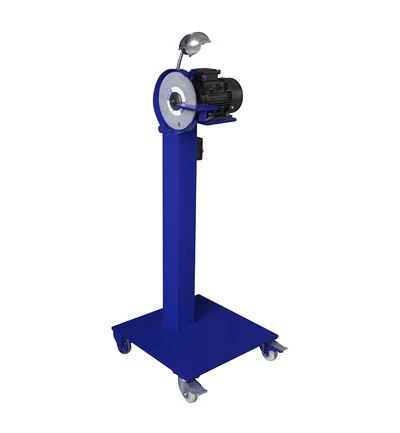

High-speed steel (HSS) saw blades remain a core cutting tool in metalworking, tube processing, and general fabrication due to their balance of toughness, heat resistance, and cost efficiency. However, achieving stable cutting performance and long blade life depends less on the blade material alone and more on how key design parameters are selected and matched to the machine and application. From diameter and thickness to tooth geometry and cutting angles, each factor plays a structural role in cutting efficiency, surface quality, and operational reliability.

Blade diameter directly influences peripheral cutting speed and machine load. Smaller diameters reduce linear cutting speed, limiting productivity but easing mechanical stress on the saw and spindle. Larger diameters increase cutting speed and throughput, but they also impose higher requirements on machine rigidity, motor power, and blade stability. For this reason, blade diameter should always be selected according to the specific circular saw model and the maximum allowable diameter defined by the equipment manufacturer. Oversizing the blade may improve output temporarily but increases the risk of vibration, tooth damage, and bearing wear.
From a theoretical perspective, thinner blades reduce kerf width and material waste. In practice, however, excessive thinness compromises rigidity. During cutting, an overly thin HSS blade is more prone to lateral deflection, which can degrade cut accuracy, generate vibration, and accelerate edge wear. Blade thickness must therefore be determined by a combination of blade diameter, cutting parameters, and material resistance. Special applications, such as slotting or grooving, may require predefined thicknesses dictated by tooling standards or machine constraints.
The arbor hole, while structurally simple, is critical for rotational accuracy. A precise fit between blade and spindle ensures concentric rotation and minimizes runout. Standard bore sizes-such as 32 mm or 25.4 mm-are common, but adapters, bushings, or machining modifications can be used to match non-standard equipment. Regardless of method, maintaining tight tolerances is essential, as excessive clearance can cause imbalance, vibration, and uneven tooth loading.
The number of teeth determines how cutting load is distributed across the blade. Higher tooth counts increase the number of cutting edges engaged per unit time, improving surface finish under appropriate feed conditions. However, excessively dense teeth reduce gullet volume, limiting chip evacuation and increasing heat buildup. Conversely, too few teeth increase individual tooth load, resulting in impact stress, blade bounce, and shortened edge life. Optimal tooth count must be selected based on material thickness, feed rate, and desired balance between cutting speed and surface quality.
HSS saw blades are produced with various tooth profiles, including alternating left–right teeth, hook or angular teeth, curved-back teeth, high–low configurations, and composite forms. Among these, alternating left–right teeth are widely used due to their stable cutting behavior and good chip distribution. Combination tooth designs integrate multiple profiles to enhance performance in specific materials, though they require more complex grinding and tighter manufacturing control. Tooth form should be selected to suit material hardness, section geometry, and cutting stability requirements.
Diameter, thickness, bore size, tooth count, tooth form, and angle geometry do not function independently. They form an integrated system that must be matched to machine rigidity, spindle speed, feed rate, and workpiece characteristics. Improper parameter combinations-such as high tooth density with insufficient feed or thin blades on high-power machines-often lead to overheating, vibration, and reduced blade life. Conversely, a well-matched HSS blade delivers consistent cutting, predictable wear patterns, and lower cost per cut.
Conclusion
Selecting a high-speed steel saw blade is an engineering decision rather than a single-parameter choice. By systematically aligning blade geometry with equipment capability and cutting conditions, manufacturers and fabricators can significantly improve efficiency, surface quality, and tool longevity. In competitive production environments, such informed selection is a practical lever for reducing downtime and controlling total cutting costs.