
In industrial sawing operations, the width of a bandsaw strip is more than a basic dimensional parameter. It plays a decisive role in tooth geometry accuracy, cutting stability, and overall machining quality. For both metal-cutting and high-precision applications, the relationship between strip width control, manufacturing tolerances, and tooth grinding precision directly determines cutting uniformity, tool life, and process reliability.

Functional Significance of Bandsaw Strip Width
Bandsaw strip width is defined as the distance from the tooth tip to the blade back, measured across the blade cross-section that circulates between the drive wheels. This dimension governs the blade's structural rigidity, lateral stiffness, and resistance to deflection under cutting loads.
Wider strips provide enhanced bending resistance, enabling improved straight-line accuracy during long or heavy-duty cuts. This structural advantage is especially critical when cutting thick sections, solid bars, or high-strength alloys, where lateral forces are substantial. Conversely, narrower strips offer increased flexibility, allowing tighter cutting radii and reduced kerf width, which is advantageous in contour cutting or material-saving applications.
Manufacturing Tolerances and Tooth Grinding Accuracy
Strip width consistency is a fundamental prerequisite for precision tooth grinding. During manufacturing, grinding wheels and setting tools are calibrated based on nominal strip dimensions. Even minimal deviations in strip width can alter grinding contact angles, tooth height uniformity, and setting symmetry.
Empirical studies on bi-metal bandsaw blades indicate that minor width fluctuations-on the order of tenths of a millimeter-can result in measurable differences in individual tooth engagement. These variations lead to uneven cutting depths among teeth, which increases localized cutting forces and accelerates wear on overloaded cutting edges.
Because each tooth functions as an independent cutting element, consistent strip width ensures that load distribution across the tooth row remains uniform. In contrast, inconsistent width causes some teeth to penetrate deeper than intended, while others contribute less effectively, reducing cutting efficiency and surface quality.
Impact on Cutting Dynamics and Stability
During operation, strip width directly influences blade behavior under dynamic conditions. Wider blades exhibit greater resistance to lateral vibration and twisting, contributing to smoother cuts and improved dimensional accuracy. This stability is particularly beneficial in automated or high-feed cutting environments, where cutting forces fluctuate rapidly.
Narrower blades, while less rigid, reduce material removal resistance and enable intricate cutting paths. However, their lower stiffness requires precise tensioning and controlled feed rates to avoid deviation, vibration, or premature fatigue.
Selecting an appropriate strip width therefore involves balancing rigidity, cutting accuracy, kerf efficiency, and application requirements, rather than relying on width alone as a strength indicator.
Tooth Wear Behavior and Service Life
Tooth grinding consistency has a direct impact on wear progression throughout the blade's service life. Irregular tooth geometry-often caused by strip width inconsistency during grinding-leads to uneven stress distribution at the cutting edge. This condition promotes early-stage tooth chipping, localized flank wear, and micro-fracture initiation.
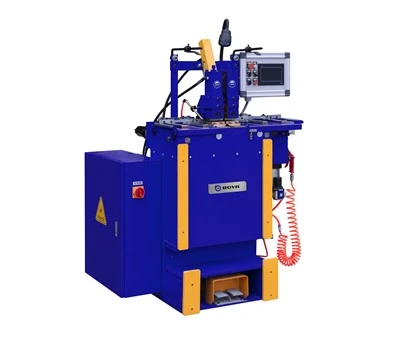
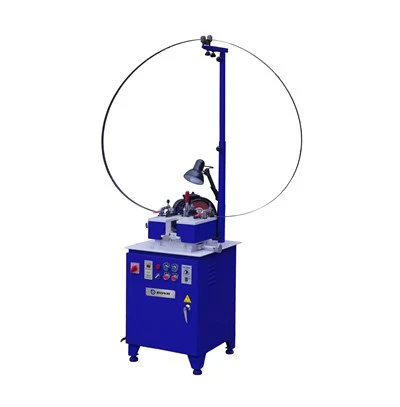
Advanced manufacturing methods, such as CNC-controlled grinding systems and inline dimensional monitoring, significantly reduce these risks by maintaining tight width tolerances and repeatable tooth profiles. Improved grinding precision not only stabilizes cutting performance but also delays the onset of abnormal wear mechanisms.
Over extended operation, blades manufactured with high dimensional accuracy demonstrate more predictable wear patterns, reduced vibration, and longer usable life before resharpening or replacement becomes necessary.
Practical Implications for Industrial Sawing
Understanding the interaction between strip width and tooth grinding precision enables manufacturers and end-users to optimize blade selection and cutting performance:
Cutting quality: Uniform strip width supports consistent tooth engagement, resulting in smoother surfaces and improved dimensional control.
Blade durability: Precise tooth geometry minimizes overload conditions, extending blade life and reducing unexpected failures.
Application matching: Wider strips suit straight, heavy-duty cutting, while narrower strips excel in curved or precision cutting tasks.
Process optimization: Modern grinding technologies and quality control systems are essential for maintaining dimensional consistency in high-performance bi-metal blades.
In industrial practice, optimal cutting results are achieved not through isolated parameter selection, but through coordinated control of strip width, tooth geometry, material properties, and cutting conditions. As sawing applications continue to demand higher precision and productivity, manufacturing accuracy in bandsaw strips remains a critical performance driver.