
Pallet dismantling is a demanding reciprocating-saw application because the cutting load changes continuously. A blade may pass through relatively soft wood, suddenly encounter a nail, return to wood, and then cut through another fastener or damaged section. This intermittent wood-to-metal loading is fundamentally different from cutting clean timber.
For this reason, tooth pitch is not simply a matter of choosing more or fewer teeth. The choice between a 10 TPI blade and a 10/14 TPI variable-pitch blade affects cutting aggression, chip removal, vibration, tooth engagement and the blade's ability to tolerate mixed materials.
Both configurations can be suitable for pallet dismantling, but they are optimized for somewhat different operating conditions.
Why TPI Matters in Pallet Dismantling
TPI, or teeth per inch, determines how many teeth engage with the workpiece during each stroke.
A lower TPI configuration generally provides larger tooth gullets and more aggressive cutting action. This is advantageous when the main material is relatively thick wood and high material-removal rates are required. A 10 TPI blade therefore provides a practical balance between cutting speed and tooth strength for many pallet dismantling operations.
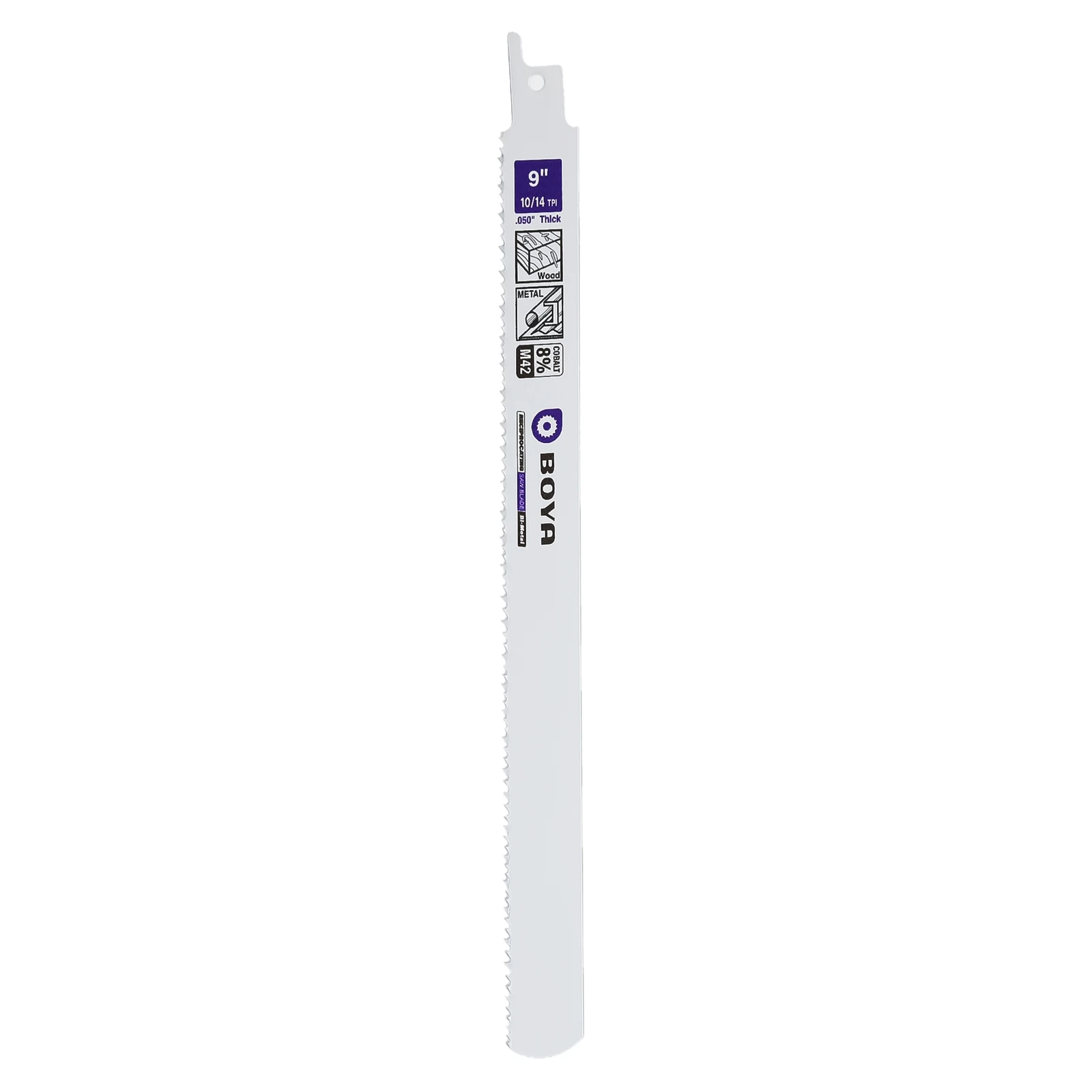
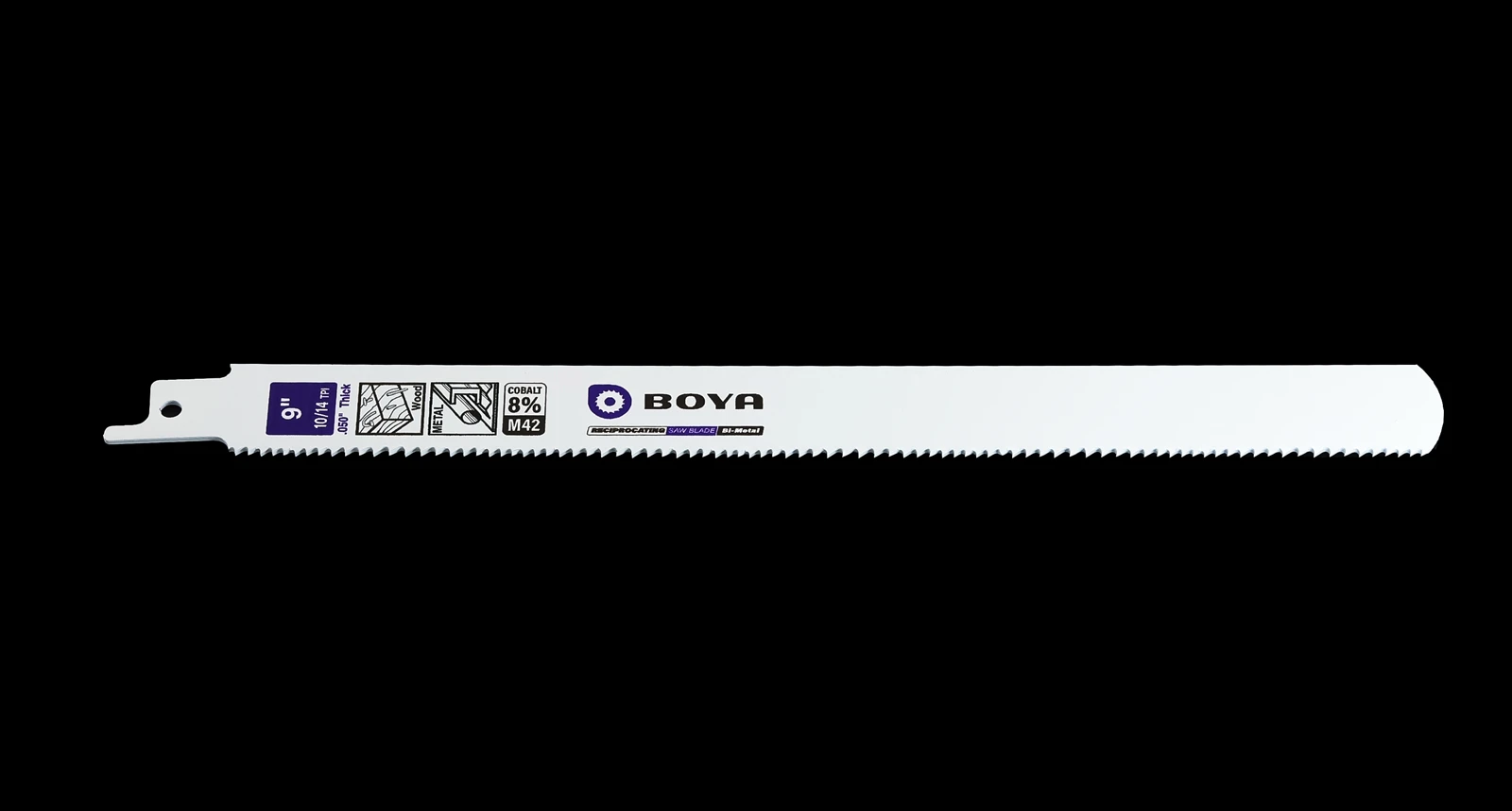
A 10/14 TPI blade uses a variable tooth pitch. Instead of maintaining an identical tooth spacing along the cutting edge, the tooth density changes between approximately 10 and 14 teeth per inch. Variable-pitch designs are widely used for mixed-material reciprocating applications, including nail-embedded wood and metal.
The important point is that 10 TPI and 10/14 TPI are not simply "fast" versus "slow" versions of the same blade. Their tooth engagement characteristics are different, and those differences become important when the material is inconsistent.
10 TPI: More Aggressive Cutting Through Wood
For pallets containing substantial amounts of wood and relatively predictable nail exposure, 10 TPI can be an efficient configuration.
The larger tooth spacing allows each tooth to remove a comparatively large volume of wood. This supports aggressive material removal and helps prevent the gullets from becoming overloaded when cutting thick boards. The configuration is particularly useful when the operator needs to dismantle pallets rapidly rather than make a fine or highly controlled cut.
Another advantage is tooth clearance. Wood chips generated during aggressive cutting need sufficient space to leave the cutting zone. If the tooth geometry and gullet volume are properly matched to the application, a 10 TPI blade can maintain productive cutting without excessive chip packing.
However, pallet wood is rarely completely clean. Nails, staples, damaged timber, dirt and embedded foreign material can interrupt the cutting process. When the blade repeatedly transitions between wood and metal, the larger tooth spacing alone does not eliminate the mechanical shock generated at the tooth edge.
Therefore, a 10 TPI blade is most effective when combined with a durable bimetal construction, appropriate blade thickness and tooth geometry designed for demolition work.
10/14 TPI: Better Adaptability to Mixed Materials
The main advantage of 10/14 TPI is its adaptability.
Pallet dismantling does not always follow a consistent cutting pattern. One section may contain only wood, while another may contain several nails close together. In some operations, the blade may also encounter thin metal fasteners or other embedded material.
Variable pitch distributes the cutting action across teeth with different spacing. This changes the way individual teeth enter and leave the workpiece and can help make the cutting process less repetitive than a uniform tooth pattern.
Commercial blade specifications also show that 10/14 TPI bimetal blades are commonly positioned for nail-embedded wood and mixed-material cutting.
This makes 10/14 TPI particularly attractive when material composition is unpredictable and the operator wants one blade configuration capable of handling wood while tolerating intermittent metal contact.
It should not be interpreted as meaning that every 10/14 TPI blade will automatically outperform every 10 TPI blade. Blade substrate, tooth hardness, tooth geometry, blade thickness, saw power and operating technique all influence actual performance.
Cutting Speed vs. Cutting Stability
The practical difference can be understood as a trade-off between aggressive wood removal and broader material adaptability.
A 10 TPI blade tends to favor aggressive cutting through wood. When the workpiece consists mainly of relatively thick pallet boards, this characteristic can be valuable because fewer teeth are engaged over a given length and each tooth can remove more material.
A 10/14 TPI blade distributes cutting across a greater number of teeth in portions of the tooth line. This can provide a more controlled cutting response when the workpiece changes from wood to nails or other embedded material.
The Role of Bimetal Construction
Tooth pitch cannot compensate for an unsuitable blade material.
Pallet dismantling exposes the cutting edge to repeated mechanical shock. A bimetal blade combines a hardened high-speed-steel cutting edge with a more flexible spring-steel body. This construction allows the teeth to maintain wear resistance while the blade body retains the flexibility required for reciprocating motion.
For pallet applications, this combination is particularly relevant because the blade must tolerate repeated transitions between cutting wood and striking fasteners.
The tooth edge must resist wear and chipping, while the backing material must withstand repeated bending stresses. The result is a blade architecture better suited to intermittent and unpredictable cutting than a simple high-carbon-steel blade.
When Should You Choose 10 TPI?
A 10 TPI bimetal reciprocating saw blade is a logical choice when:
●Thick pallet boards represent most of the cutting load.
●Aggressive wood cutting is the primary requirement.
●Nail exposure is present but not excessively concentrated.
●High cutting productivity is more important than maximum material versatility.
●The operator wants a relatively simple, consistent tooth pattern.
●The blade is used mainly for dismantling wooden pallets rather than broader demolition work.
For high-volume operations with relatively consistent pallet construction, this configuration can provide an efficient balance between cutting speed and tooth durability.
When Is 10/14 TPI More Appropriate?
A 10/14 TPI bimetal blade becomes more attractive when:
●Nail density varies significantly between pallets.
●Wood and metal are frequently encountered in the same cut.
●The operator handles mixed pallet types.
●Cutting conditions change from one board to another.
●Reduced blade switching is desirable.
●The same blade must serve both pallet dismantling and general demolition applications.
Its strength is therefore not simply tooth count, but adaptability to changing cutting conditions.
The Better Selection Depends on the Workpiece
There is no universal TPI specification for every pallet dismantling operation.
If the primary objective is aggressive cutting through substantial amounts of wood, 10 TPI provides a strong starting point. If the cutting environment contains more variable nail exposure and mixed materials, 10/14 TPI offers greater versatility.
Blade thickness, width, length and tooth geometry should then be matched to the reciprocating saw and the pallet structure. Excessive blade flex can reduce cutting control, while an unnecessarily rigid blade may increase the risk of breakage under unfavorable loading.
Feed pressure also matters. Increasing pressure does not necessarily increase productivity proportionally. When the tooth edge is already working near its mechanical limit, excessive force can increase vibration, tooth loading and blade deflection rather than improving effective cutting speed.
For professional pallet dismantling, the objective should therefore be to match TPI, blade construction, dimensions, saw stroke and operating technique as one cutting system.
The choice between 10 TPI and 10/14 TPI should be based on the actual composition and variability of the pallets being processed.
10 TPI emphasizes aggressive wood cutting and material removal. 10/14 TPI emphasizes adaptability when wood, nails and occasional metal are encountered in changing proportions.
In other words, TPI should not be selected from a specification sheet alone. It should be selected according to the material mix, nail exposure, cutting frequency and production objective of the pallet operation.