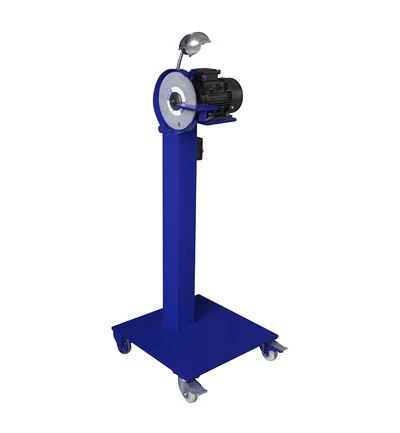


Every new or freshly reground HSS circular saw blade requires a controlled break-in period. During initial cutting, the tooth edges are extremely sharp but not yet fully stabilized. Running the blade at full feed immediately can cause micro-chipping or premature edge fatigue.
A reduced feed rate during the first cutting cycle-typically the first minute of engagement-allows the tooth edges to seat properly against the workpiece. This gradual adaptation minimizes localized stress, promotes uniform load distribution, and significantly improves long-term blade durability. Proper break-in is a low-cost but highly effective step that is often overlooked in high-throughput environments.
Cutting parameters must be matched carefully to the material being processed. The feed rate and rotational speed of the blade are primarily influenced by material hardness, cross-sectional area, and cutting resistance.
For materials with high cutting resistance, such as stainless steel or heat-resistant alloys, lower cutting speeds and moderated feeds help reduce thermal load on the tooth edge and prevent rapid wear. In contrast, low-carbon steels and certain cast iron grades allow for higher blade speeds, provided vibration remains under control.
Excessive feed can overload the teeth, while insufficient feed causes rubbing rather than cutting-both scenarios accelerate wear and increase energy consumption. Stable chip formation, rather than maximum speed, should always be the primary indicator of correct parameter selection.


HSS circular saw blades are designed for multiple regrinding cycles, making correct sharpening a critical factor in cost efficiency. Cutting under deteriorated conditions-such as vibration, abnormal noise, or excessive burr formation-indicates that the blade edge has degraded and should be serviced immediately.
Precision grinding restores correct tooth geometry, rake angle, and clearance, allowing the blade to cut efficiently with reduced cutting force. Delayed or improper sharpening not only shortens blade life but also increases spindle load and compromises cut quality. Regular inspection schedules and professional grinding practices are essential to fully realize the economic advantage of HSS blades.
Effective Coolant Application and Thermal Control
Metal cutting with circular saw blades generates concentrated heat at the tooth-workpiece interface. Without adequate coolant, excessive temperature can lead to blade distortion, tooth softening, and dimensional inaccuracies in the cut.
Proper coolant delivery serves multiple functions: it reduces cutting temperature, flushes chips away from the cutting zone, and minimizes friction between the blade body and the workpiece. Consistent coolant flow is especially critical during continuous or heavy-duty cutting operations. Inadequate cooling not only reduces blade lifespan but also negatively affects surface finish and dimensional stability.

Chip Morphology as a Diagnostic Tool
Chip appearance provides valuable real-time feedback on cutting conditions and blade performance. Operators can assess process stability by observing chip shape and consistency:
Fine powder-like chips typically indicate insufficient feed pressure, leading to inefficient cutting and excessive friction.
Thick, short, or broken chips often signal overload conditions that can accelerate tooth wear.
Long, spiral-shaped chips generally reflect balanced cutting parameters and healthy blade engagement.
Adjustments to feed rate, tooth pitch, or blade specification should be guided by chip behavior rather than machine settings alone.
Matching Tooth Geometry to Cutting Conditions
Tooth pitch and geometry must align with material thickness and feed demands. Increasing feed rate without adjusting tooth pitch can overload fine-tooth blades, while coarse-tooth blades operating at low feed may cause impact loading and instability.
Selecting the correct tooth configuration ensures smooth chip evacuation, reduced vibration, and consistent cutting force. Proper matching between blade design and application is a key contributor to both blade longevity and operational efficiency.
Conclusion
Reducing cutting cost per part with high-speed steel circular saw blades is not solely a matter of blade selection-it is the result of disciplined operational control. Proper break-in procedures, optimized cutting parameters, timely regrinding, effective cooling, and informed interpretation of chip formation all play integral roles in maximizing blade performance.
When these practices are applied systematically, manufacturers can achieve longer blade life, improved cut quality, and higher overall productivity, reinforcing the continued relevance of HSS circular saw blades in modern metal cutting operations.