
In modern meat processing operations, reciprocating saws have become indispensable tools for carcass splitting, portioning, deboning assistance, and primary processing of large animal sections. While machine power and operating parameters are important, the interaction between the blade and biological material ultimately determines cutting efficiency, blade life, product quality, and production throughput.
Unlike metal cutting, where material properties are relatively uniform and predictable, meat and bone present a highly heterogeneous cutting environment. A single cutting operation may involve soft muscle tissue, connective tissue, cartilage, marrow cavities, and dense cortical bone. Each component responds differently to cutting forces, creating complex loading conditions for reciprocating saw blades.
The Unique Mechanical Characteristics of Meat and Bone
Meat and bone differ significantly in both composition and mechanical behavior.
Muscle tissue is primarily composed of water, proteins, and connective fibers. It exhibits viscoelastic properties, meaning its deformation behavior depends on both applied force and cutting speed. Bone, in contrast, behaves more like a natural composite material consisting of mineralized hydroxyapatite crystals reinforced by collagen fibers.
This structural difference creates dramatic variations in cutting resistance.
Soft tissues generally deform before separation occurs, whereas bone resists deformation and requires fracture-based material removal mechanisms. Consequently, blades experience continuously changing loads when moving through mixed biological structures.
The transition from muscle tissue to dense bone often represents the most demanding stage of the cutting process.
Bone density is one of the most important factors affecting reciprocating saw performance.
Animal bones contain two primary structural regions:
●Cortical bone (compact outer layer)
●Trabecular bone (porous internal structure)
Cortical bone exhibits significantly higher density and strength than trabecular bone. As a result, blade teeth encounter much greater resistance when penetrating compact bone surfaces.
Higher-density bones generate:
●Increased cutting forces
●Greater tooth loading
●Elevated vibration levels
●Faster edge wear
●Higher energy consumption
These effects become particularly significant in industrial operations where thousands of cutting cycles occur daily.
Blade manufacturers therefore pay close attention to tooth geometry, hardness, and wear resistance when designing products for bone-cutting applications.
Differences Between Pork and Beef Bone Cutting
Not all animal bones create identical cutting conditions.
Pork processing and beef processing often require different blade characteristics due to differences in skeletal structure.
Beef bones are generally larger, denser, and thicker than pork bones. Mature cattle possess highly mineralized cortical bone that generates substantially higher cutting resistance.
During beef carcass splitting operations, blades frequently encounter:
●Greater impact loads
●Increased friction
●Higher thermal generation
●More severe tooth wear
Pork bones, while still challenging, typically produce lower cutting forces because of their reduced thickness and density.
This distinction explains why blade performance data obtained during pork processing cannot always be directly applied to beef processing environments.
One of the most discussed topics in meat processing is the difference between cutting fresh and frozen products.
Fresh meat contains a high percentage of unfrozen water and exhibits relatively flexible behavior. During cutting, tissues deform before separation occurs, creating moderate cutting resistance.
Frozen meat behaves differently.
When temperatures fall below freezing, water within the tissue transforms into ice crystals. This changes the mechanical properties of the material significantly.
Frozen meat generally exhibits:
●Increased hardness
●Reduced elasticity
●Higher brittleness
●Greater cutting resistance
The blade no longer cuts through soft tissue alone. Instead, it must fracture frozen structures that behave more like rigid solids.
As freezing temperature decreases further, cutting loads continue to increase.
For this reason, processing plants handling frozen products often require:
●More robust blade designs
●Optimized tooth geometry
●Increased motor power
●Carefully controlled feed rates
Failure to adapt cutting parameters can accelerate blade wear and increase equipment stress.
While muscle tissue and bone receive most attention, cartilage plays a critical intermediate role.
Cartilage possesses properties between soft tissue and mineralized bone.
Its flexible yet resilient structure creates variable cutting resistance that can disrupt cutting stability.
When blades transition repeatedly between cartilage and bone, load fluctuations become more pronounced.
These fluctuating forces contribute to:
●Tooth fatigue
●Increased vibration
●Reduced cutting consistency
Effective blade design must therefore account not only for bone density but also for the transitional tissues encountered during processing.
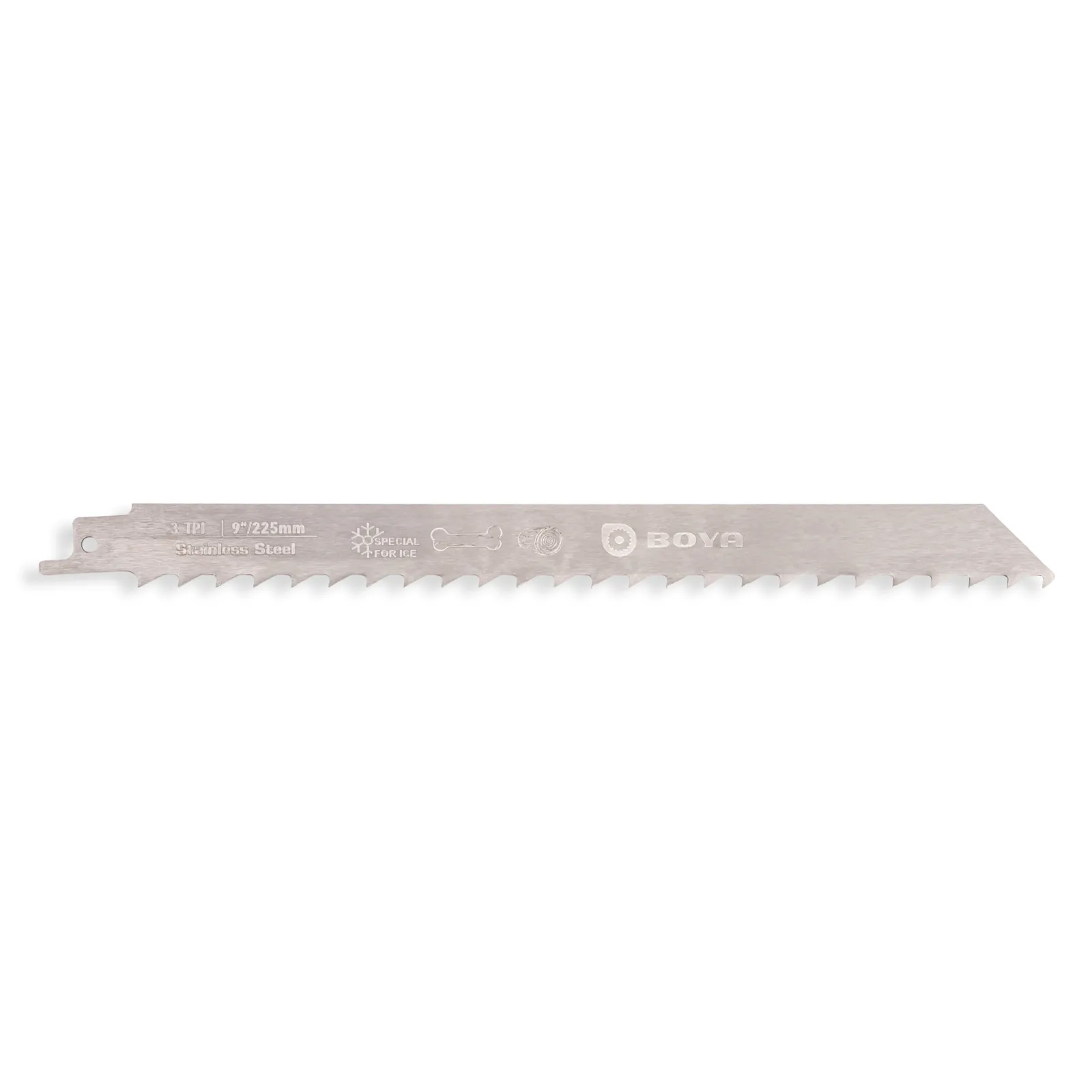
The geometry of reciprocating saw teeth directly influences cutting performance.
Key design parameters include:
●Tooth pitch
●Tooth height
●Gullet volume
●Rake angle
●Tooth set pattern
Coarser tooth designs generally provide improved debris evacuation and higher productivity in heavy-duty bone cutting.
However, excessively coarse teeth may increase vibration and reduce surface quality.
Finer tooth configurations often generate smoother cuts but may become overloaded when processing dense bone sections.
The optimal design depends on balancing:
●Material removal rate
●Tooth strength
●Debris evacuation
●Product quality requirements
Modern food-processing blades increasingly use application-specific tooth geometries rather than universal designs.
Bone cutting exposes blades to several wear mechanisms simultaneously.
Bone contains mineral components capable of gradually eroding cutting edges.
Repeated contact with hard cortical bone creates micro-chipping and edge degradation.
Reciprocating motion subjects teeth to cyclic loading conditions.
Over time, microscopic cracks can initiate and propagate.
In food-processing environments, blades are regularly exposed to moisture, blood, salts, cleaning chemicals, and sanitizing agents.
Without adequate corrosion resistance, surface degradation can accelerate wear progression.
These combined mechanisms often determine blade life more than simple hardness values alone.
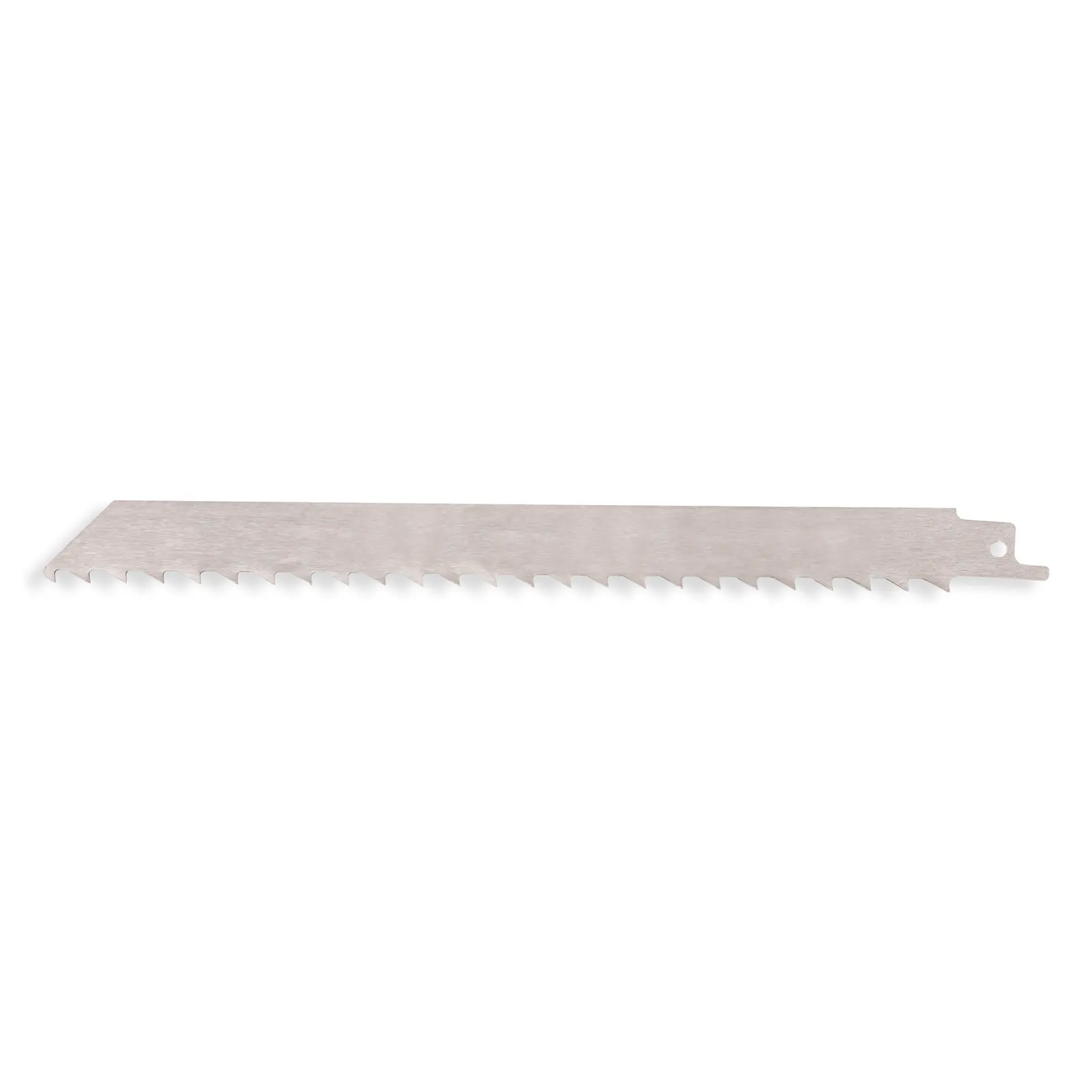
Hygiene Requirements and Stainless Steel Blade Technology
Its advantages include:
●Corrosion resistance
●Easy cleaning
●Compatibility with sanitation procedures
●Reduced contamination risk
Modern stainless steel blade designs increasingly emphasize surface finish quality and cleanability alongside cutting performance.
Therefore, The performance of a reciprocating saw is influenced not only by machine specifications but also by the complex biological structures being processed. Variations in bone density, animal species, tissue composition, cartilage distribution, and product temperature all affect cutting resistance, blade wear, and overall processing efficiency.
As the meat industry continues to demand greater efficiency, hygiene, and consistency, blade technology will increasingly focus on application-specific designs that address the unique challenges posed by meat and bone cutting environments.