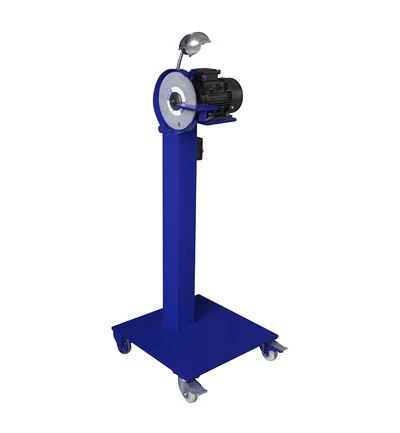

Selecting the correct band saw blade width and thickness plays a decisive role in achieving stable, precise, and low-waste cutting results when processing frozen fish, large frozen blocks, and smaller fillets in commercial food production. Proper dimensional matching directly affects blade rigidity, cutting accuracy, kerf generation, and overall blade lifespan, thereby influencing throughput and operational efficiency in frozen food processing environments.
Importance of Blade Width and Thickness
Blade width and thickness collectively determine a band saw blade's ability to maintain straight tracking, withstand cutting forces, and remove material efficiently while preserving cut quality. Wider blades deliver greater structural stiffness, making them suitable for cutting dense, large-format frozen products such as whole frozen fish or tuna loins. In contrast, narrower blades offer improved flexibility and reduced kerf, which is advantageous when processing smaller portions or thin fillets where yield preservation and surface finish are critical.
Blade thickness works in tandem with width. Thicker blades provide enhanced resistance to bending and allow more consistent tension under heavy cutting loads, whereas thinner blades generate a narrower kerf, reducing material loss. This is particularly important for high-value frozen fish products. In commercial food applications, carbon steel band saw blades are commonly produced within a thickness range of approximately 0.50–0.56 mm (0.020–0.022 inches), which suits most general frozen cutting tasks.
Blade Width Selection
For frozen food processing, commonly used band saw blade widths typically range from 13 mm to 25 mm or wider, depending on product size and cutting demands.
●Wide Blades (approximately 19–25 mm)
Provide superior straight-line stability and strong resistance to lateral deviation.
Well suited for large frozen blocks and cross-section cuts involving hard materials such as frozen fish bone or dense meat.
Support consistent cutting accuracy in heavy-duty production lines where long, straight cuts are required.
Mid-Range Blades (approximately 16–19 mm)
Offer a balanced combination of stiffness and adaptability.
Frequently selected for mixed frozen fish and meat processing where product dimensions vary. Commonly available in carbon steel and food-grade configurations for versatile use.
●Narrow Blades (approximately 13–16 mm)
Enable finer cutting control with reduced kerf loss and lower material waste.
Appropriate for small fillets, portioning applications, and precision cuts requiring high surface quality.
Often used with finer tooth spacing to achieve cleaner slicing results.
Thickness and Material Considerations
Blade thickness has a direct influence on kerf size and structural durability. For frozen food applications, carbon steel band saw blades are typically manufactured with heat-treated and precision-ground teeth to maintain hardness and edge stability at low temperatures.
●Standard Thickness (0.50–0.56 mm / 0.020–0.022")
This thickness range represents an effective compromise between strength and cutting efficiency. It is widely adopted in both frozen meat and frozen fish processing, offering sufficient rigidity while limiting unnecessary product loss caused by excessive kerf width.
●Thicker Blades (above approximately 0.60 mm)
–In applications requiring maximum rigidity-such as cutting very thick frozen blocks or bone-in products-slightly thicker blades help minimize deflection and maintain cutting accuracy under higher feed pressures.
–To meet food safety and hygiene requirements, these blades are generally polished, hardened, and precisely ground, ensuring smooth cutting surfaces and reducing contamination risks. Some designs incorporate narrow, precision-controlled kerfs to further improve yield and portion consistency.
Application Scenarios
●Large Frozen Fish Blocks (e.g., tuna loins)
Cutting large frozen blocks demands blades with sufficient width and thickness to prevent bending and ensure stable tracking through dense frozen tissue and bone. Blades in the 19–25 mm width range, combined with moderate thickness and 3–4 TPI, provide reliable stability and smooth cutting performance. Slower feed rates are typically used to reduce vibration and surface damage in hard frozen materials.
●Smaller Fillets and Portioning Cuts
When processing smaller frozen fillets, narrower blades (13–16 mm) help minimize kerf waste and improve portion accuracy. Maintaining a thickness of 0.50–0.56 mm ensures adequate blade strength without excessive material removal. Finer tooth configurations further enhance surface finish on delicate products.
Machine Compatibility and Compliance
Blade dimensions must be selected in accordance with band saw machine specifications. Commercial frozen food saws define acceptable limits for blade width, thickness, tension capacity, and wheel diameter. Using blades that exceed these limits may result in improper tracking, reduced blade life, and compromised cutting accuracy.
From a regulatory perspective, food processing operations require blades manufactured from food-grade carbon steel that can be cleaned and sanitized efficiently. Hardened and polished blade surfaces reduce product adhesion, while laser-etched markings support traceability and compliance with food safety standards.
Practical Selection Recommendations
Align blade width with product size: Wider blades are preferred for large frozen blocks, while narrower blades suit precision cutting and smaller portions.
Optimize thickness for efficiency: A thickness of approximately 0.50–0.56 mm delivers reliable performance with controlled kerf loss for most frozen applications.
Balance rigidity and yield: Increased blade rigidity improves straight cutting but may increase waste when processing small fillets; selection should reflect yield priorities.
Confirm machine compatibility: Always follow machine manufacturer guidelines for blade dimensions to ensure proper tension, tracking, and safe operation.