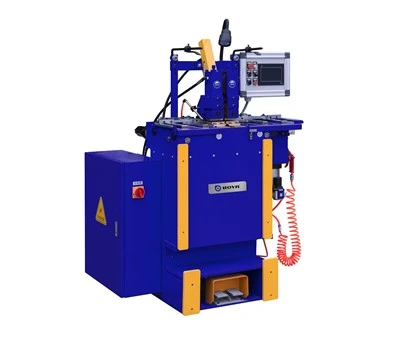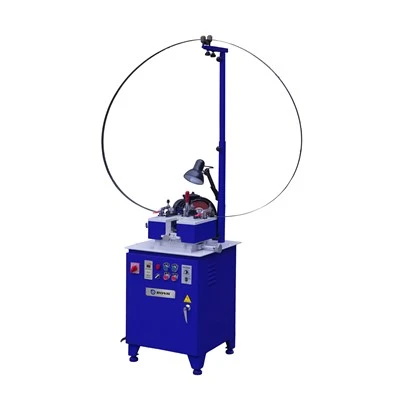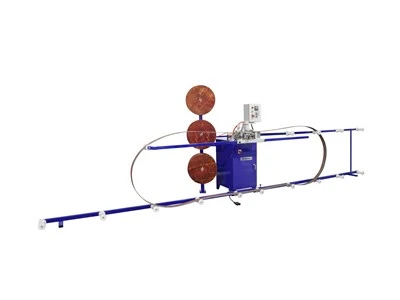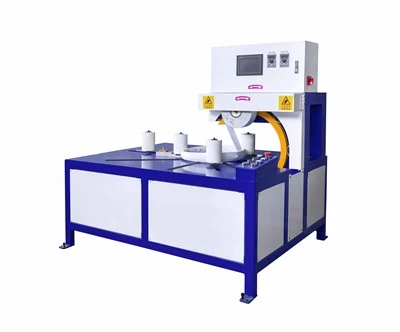

In industrial ice processing, stainless steel has become the dominant solution for ice cutting applications, particularly in food-grade environments such as commercial ice production, beverage service supply chains, seafood logistics, and cold storage processing.
The preference for stainless steel is not based on a single performance advantage. Instead, it results from a combination of corrosion resistance, environmental stability under condensation, low-temperature mechanical reliability, food safety compatibility, fatigue resistance under cyclic loading, and surface cleanability. Each of these factors contributes to consistent blade behavior in demanding real-world ice cutting conditions.
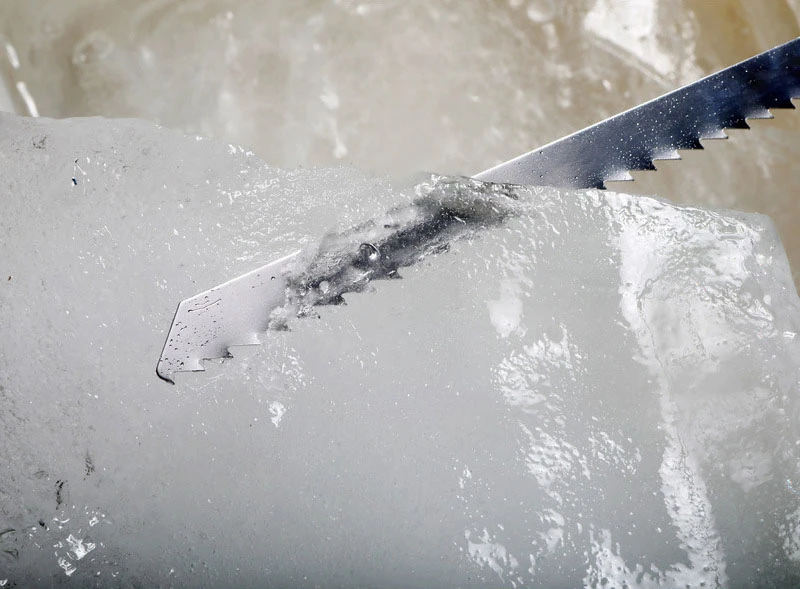
Ice cutting operations are inherently associated with continuous exposure to water in multiple forms, including meltwater, airborne humidity, and repeated wash-down cleaning procedures. This creates a highly corrosive microenvironment for cutting tools.
Conventional carbon steels tend to oxidize rapidly under such conditions, leading to surface rust formation, localized pitting, and gradual degradation of cutting edge geometry. These defects not only reduce cutting efficiency but also act as stress concentrators that can accelerate fatigue crack initiation.
Stainless steel, by contrast, contains chromium elements that form a stable passive oxide film on the surface. This thin protective layer continuously regenerates when mechanically damaged, significantly slowing down corrosion progression. As a result, the blade maintains geometric stability over longer operational cycles, ensuring more predictable cutting performance and reduced risk of premature failure.
Ice processing environments frequently involve alternating exposure between sub-zero operating zones and ambient-temperature handling areas. When blades transition between these conditions, condensation naturally forms on the metal surface.
This repeated wet-dry and warm-cold cycling creates additional challenges for material stability. In some steels, such conditions can promote surface oxidation, micro-pitting, or localized structural instability.
Stainless steel demonstrates strong resistance to these environmental fluctuations. Its microstructure remains stable under repeated thermal cycling, and its surface passivation layer minimizes the impact of condensation-related corrosion. This ensures that blade performance remains consistent even in high-humidity cold-room installations where environmental control is limited.
Compliance with Food-Grade Safety Requirements
In commercial ice production and foodservice supply chains, ice is often treated as a direct food-contact material. This means that any tool used in shaping, portioning, or resizing ice must comply with strict hygiene and safety standards.
Stainless steel is widely accepted in food-processing equipment due to its inert chemical behavior and low risk of contamination. It does not readily react with water, organic residues, or cleaning agents commonly used in sanitation cycles.
From a regulatory perspective, stainless steel supports compliance with international food safety frameworks that emphasize cleanability, traceability, and non-contaminating material selection. This makes it particularly suitable for applications where ice is used in beverages, food preservation, or direct consumer contact environments.
Low-Temperature Toughness and Fatigue Resistance
While ice becomes more brittle at lower temperatures, the saw blade must maintain sufficient toughness to resist cyclic mechanical stress during cutting. Reciprocating saw operation imposes repeated loading and unloading cycles on the blade body, particularly at the tooth root region where stress concentration is highest.
Stainless steel alloys used in reciprocating blade production are engineered to balance hardness with ductility. This balance is essential in low-temperature environments, where excessive brittleness in the blade material could lead to micro-crack formation and eventual fatigue failure.
During prolonged operation, the blade is subjected not only to cutting forces but also to vibration-induced stress fluctuations. Stainless steel's fatigue resistance under these cyclic loads helps extend service life and reduce unexpected blade breakage in continuous production settings.
Surface Cleanability and Hygiene Efficiency
Ice cutting equipment used in food-related industries must undergo frequent cleaning to prevent contamination buildup. Surface topography plays a key role in determininghow easily residues can be removed during sanitation procedures.
Stainless steel supports high-quality surface finishing techniques, including polishing and passivation treatments. These processes reduce surface roughness and minimize microscopic grooves where debris or organic material might accumulate.
A smoother surface not only improves cleaning efficiency but also reduces friction during cutting operations. Lower friction contributes to more stable cutting performance, reduced heat generation at the tooth edge, and improved overall operational consistency.
In high-frequency production environments, improved cleanability directly translates into reduced downtime and more efficient maintenance cycles.
Wear Behavior in Ice Cutting Applications
Although ice is significantly softer than metal or bone, it still imposes unique wear conditions on cutting tools. During repeated cutting cycles, fine ice particles and impurities may act as mild abrasive agents, gradually affecting tooth sharpness.
Stainless steel provides adequate resistance to this type of mild abrasive wear while maintaining its structural integrity under continuous operation. More importantly, its corrosion resistance ensures that wear does not accelerate due to surface oxidation, which is a common failure mechanism in non-stainless materials used in wet environments.
This combination of moderate wear resistance and high corrosion stability results in a balanced performance profile suitable for long-duration ice processing tasks.
Process Efficiency and Operational Stability
Beyond material properties, stainless steel contributes indirectly to process efficiency by maintaining consistent cutting geometry over time. Stable tooth edges reduce variation in cutting resistance, which in turn leads to smoother machine operation and lower vibration levels.
Reduced vibration improves not only blade life but also cutting precision, particularly in applications where uniform ice block dimensions are required. In automated or semi-automated ice production lines, this consistency is essential for maintaining predictable output quality.
In addition, reduced maintenance frequency associated with stainless steel blades helps lower total cost per cut, even if initial material costs are higher compared to carbon steel alternatives.
Integration with Modern Ice Processing Systems
Modern ice production systems are increasingly automated, integrating conveyor systems, precision cutting modules, and controlled environmental chambers. Within such systems, blade material must be compatible with continuous operation and minimal human intervention.
Stainless steel's durability under repetitive loading, combined with its resistance to corrosion and contamination, makes it suitable for integration into these automated environments. It supports longer uninterrupted production cycles and reduces the need for frequent blade replacement or manual intervention.
Stainless Steel and Food Processing Requirements
In addition to cutting performance, food processing applications impose strict hygiene requirements.
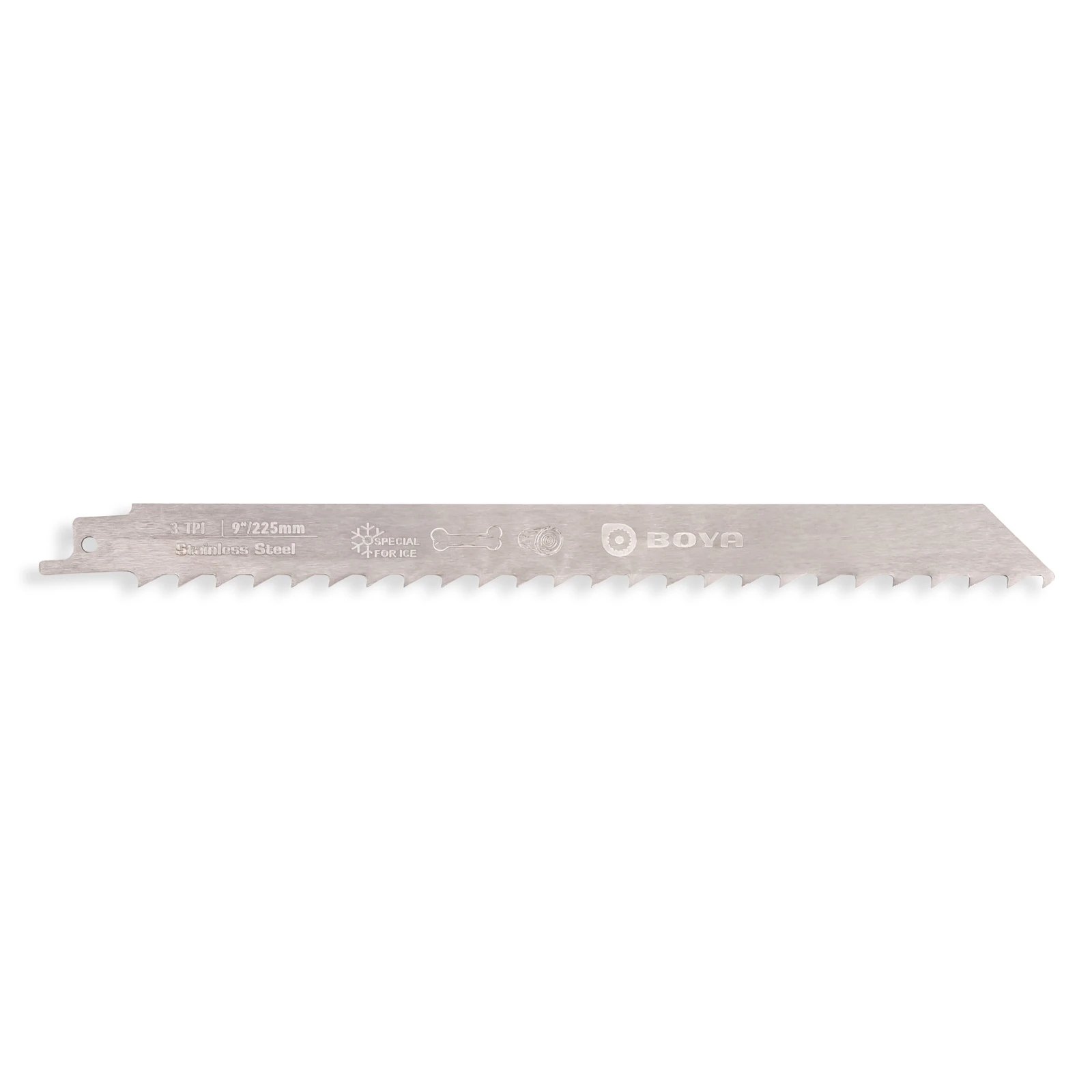
Stainless steel is widely used for reciprocating saw blades because it offers good resistance to moisture, blood residues, salts, and routine cleaning chemicals. Corrosion resistance helps preserve surface quality and reduces the formation of microscopic pits that could trap contaminants or act as starting points for fatigue cracks.
Regular cleaning and sanitation cycles also expose blades to repeated chemical and thermal changes. Therefore, material stability and surface finish are important considerations alongside hardness and wear resistance.
As food safety regulations continue to evolve, manufacturers increasingly focus on designs that combine efficient cutting with easy maintenance and long-term corrosion protection.
Stainless steel has become the material of choice for ice cutting reciprocating saw blades due to its well-balanced combination of corrosion resistance, environmental stability, food safety compliance, low-temperature toughness, fatigue resistance, and surface cleanability. Rather than excelling in a single performance metric, it delivers consistent behavior across multiple operational demands that are unique to ice processing environments.
Ranging from industrial cooling applications to high-end beverage and hospitality markets-the importance of stable, hygienic, and durable cutting tools will continue to increase. In this context, stainless steel remains a technically and economically rational solution for ensuring reliable ice cutting performance in modern processing systems.